
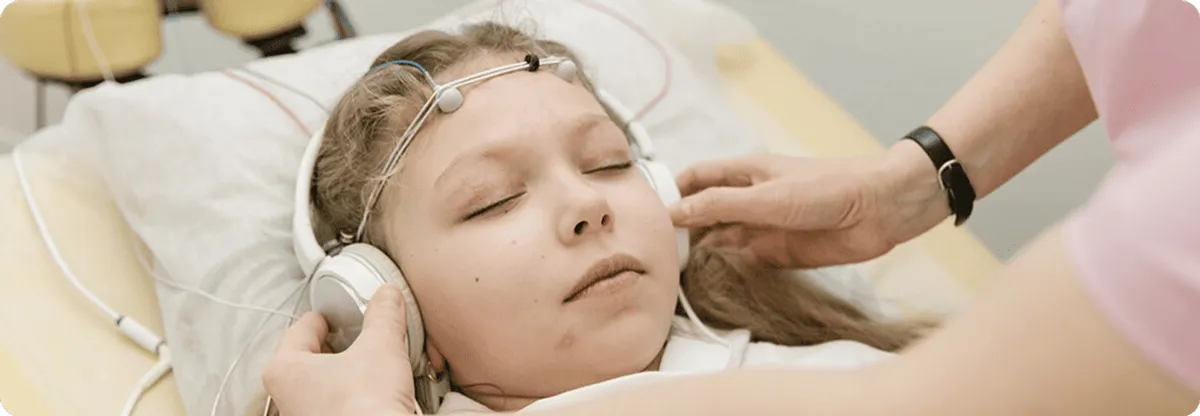
What is BAC?
Bioacoustic correction uses a recording of electrical brain activity. A computer converts EEG data into sound in real time, which the person listens to during the procedure. This describes the technology; it does not establish a clinical benefit.
How a session works
The specialist explains the procedure and places sensors on the scalp. A computer processes the EEG signals and the child or adult listens to the resulting sound through headphones. Tolerance of headphones and the ability to participate comfortably are discussed beforehand.
What happens during the procedure
The sensors record activity; in this method they do not deliver electrical current into the brain. The specialist observes the person’s comfort. Mention discomfort from the sound or sensors, and agree beforehand how to pause or stop. Hearing the signal does not in itself mean that brain function is being normalised.
Concerns people bring to a consultation
Parents ask about BAC when a child has attention difficulties, hyperactivity or impulsivity, developmental delay, autism, or speech and communication difficulties. Learning, memory, behaviour and emotional regulation may also be concerns. Adults can discuss cognitive fatigue and everyday difficulties. These are reasons for assessment, not a list of proven BAC indications.
How the decision is made
The first step is to discuss the concern, relevant history and available reports. Existing support, goals and the limitations of BAC are reviewed. The decision may involve BAC, other work or referral to a doctor before a procedure is considered. A diagnosis alone does not determine a course.
Why assessment comes first
Similar visible difficulties may call for different forms of support. The specialist considers abilities, workload, health information and possible contraindications. Mention seizures, medication and sound sensitivity. Medical safety questions require a doctor’s input and the instructions for the equipment being used.
Combining BAC with other support
If BAC is included, its proposed goal and the way changes will be reviewed are discussed beforehand. Communication work, behavioural support and neuropsychological intervention are selected according to individual needs. BAC does not replace these services or necessary medical care.
Sources and scope
NICE CG170 covers support for autistic children. The equipment manufacturer describes BAC technology.